Furnace repair in San Dimas, CA
Connect with an independent provider for heating problems in San Dimas homes.
Furnace Repair
TownSan Dimas, CA
CountyLos Angeles
ZIP91773
- 6years of experience
- 2,500customers served
- 12team members
- Since 2019serving homeowners
Heating concerns across San Dimas homes
Furnace repair in San Dimas matters in a foothill city connected by the 57, 210, and 10 freeways, with Route 66 running through town. Older areas near downtown and newer planned neighborhoods around the city have different layouts and equipment access. San Dimas sits below the San Gabriel Mountains, where cool winter nights can make a central heating system more noticeable. Independent providers in the area can assess the equipment and explain the repair options.
Older homes and varied building styles
San Dimas has older houses near its historic downtown as well as ranch-style homes, tract homes, and newer attached housing. Age can affect duct routing, venting, electrical capacity, and access to a forced air heating cabinet.
Slopes, lots, and equipment access
Some homes near the foothills sit on sloped lots, while other parts of town have flatter residential parcels. A technician may need to locate the furnace, outdoor equipment, disconnects, and safe access routes before beginning diagnostic work.
Trees, leaves, and spring pollen
Mature landscaping can leave debris around outdoor equipment and bring pollen into return-air openings. A clogged filter or restricted return can reduce airflow and contribute to furnace cycling.
Winter rain and mountain snow
Winter storms can bring rain and wind to San Dimas, while snow is generally confined to the nearby higher San Gabriel Mountains rather than the city itself. Wind-driven debris and moisture around exterior components should be checked after a storm.
How furnace repair is approached in San Dimas homes
Many San Dimas houses use a gas furnace with ductwork and a thermostat as part of a central heating system. Others may have an electric furnace or equipment installed in an attic, closet, garage, or dedicated mechanical area. A local provider begins by identifying the fuel type, model, controls, and the reported symptom.
A furnace not working can stem from a dirty filter, a thermostat setting, an ignition fault, a safety switch, or a problem affecting airflow. Furnace noise may come from panels, a blower assembly, bearings, duct movement, or combustion-related components, so the sound must be traced rather than guessed. When a gas furnace is involved, the technician checks combustion and venting concerns, including conditions that could create a carbon monoxide hazard.
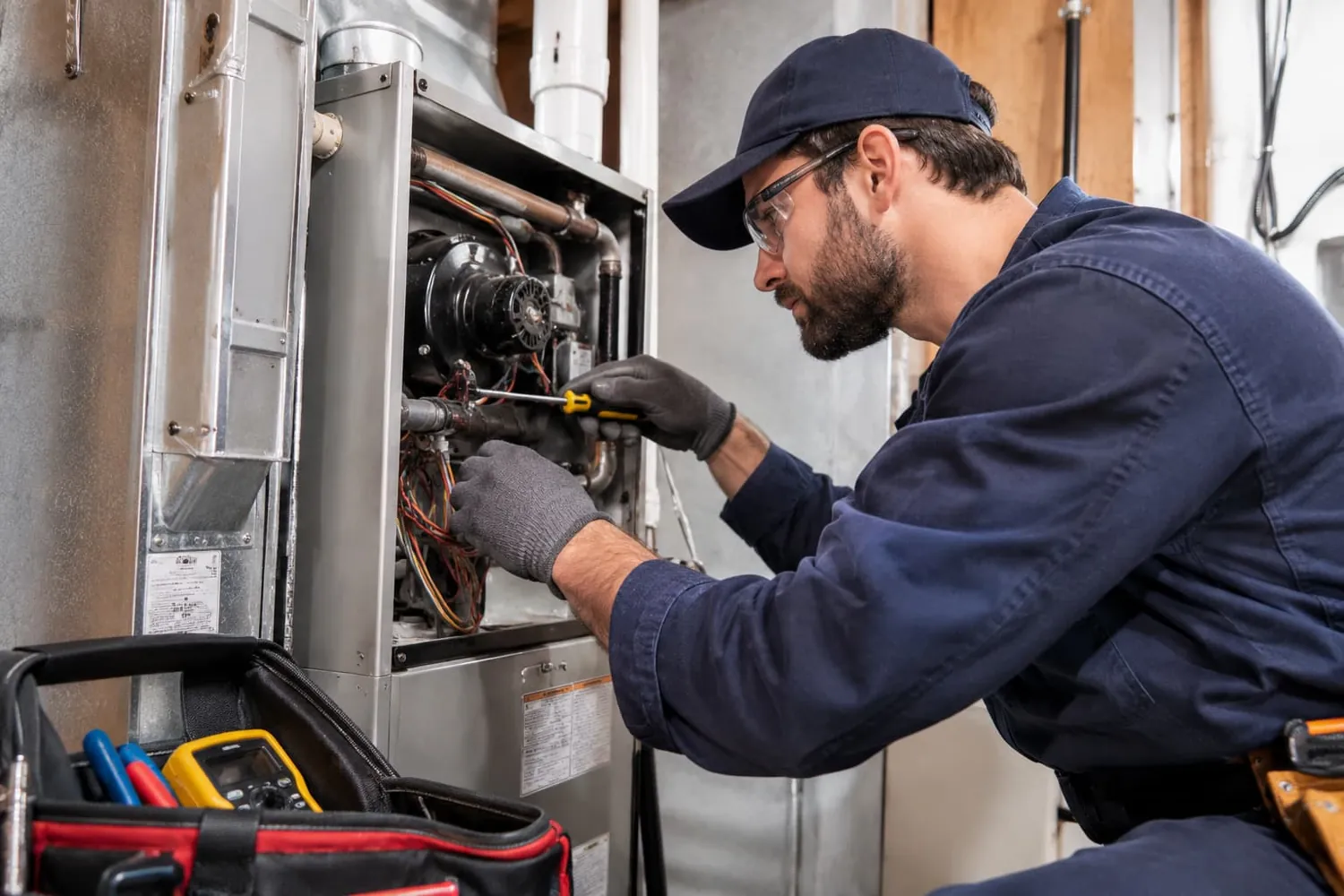
To fix a furnace, the technician who comes out typically inspects the filter path, blower operation, electrical connections, safety controls, burners, and temperature rise. Refrigerant applies to a heat pump or air-conditioning side of a split system, not to the furnace’s combustion process, but a provider can determine whether the heating system uses that equipment. After diagnosis, the independent provider can give a quote for the needed home furnace repair or discuss other practical options.
Furnace repair work in San Dimas
| Part | What it does | Signs it is failing |
|---|---|---|
| Air filter | It catches airborne debris before air moves through the furnace. | Restricted airflow, more dust, or a furnace that overheats. |
| Thermostat | It signals the furnace when indoor temperature calls for heat. | Incorrect temperature readings, no response, or irregular cycling. |
| Igniter | It starts the burner ignition process in many gas furnaces. | The furnace clicks or starts a cycle but produces no heat. |
| Flame sensor | It confirms that burner flame is present after ignition. | Burners light briefly, then shut off. |
| Blower motor | It moves heated air through the ducts and into the home. | Weak airflow, squealing, rattling, or no air movement. |
Cool nights, dry stretches, and wet winter fronts
San Dimas has hot, dry summers and generally mild winters, but nighttime temperatures can drop enough to put regular demand on heating equipment. Santa Ana wind conditions can move dust and debris, which makes filter condition and outdoor clearances worth watching. Winter rain can expose drainage, roof, or vent-cap issues around the home. Seasonal use after a long warm period can also reveal a dormant igniter or blower problem.
Downtown San Dimas
Older homes near the historic core may have later additions, changed duct routes, or updated heating equipment.
Via Verde
Hillside and larger-lot properties can have equipment locations that require a clear access plan.
San Dimas Canyon
Foothill exposure and mature vegetation can add leaves and dust around outdoor components.
Charter Oak
This San Dimas area includes established residential streets where furnace age and prior remodels can vary.
Bonita Avenue corridor
Homes near this main east-west route range from older properties to newer residential development.
San Dimas furnace questions
Which ZIP code and sections of San Dimas can be connected with a heating provider?
The city’s primary ZIP code is 91773. We connect callers in downtown San Dimas, Via Verde, San Dimas Canyon, Charter Oak, and other parts of the city with independent local providers, subject to provider coverage.
How can older houses near historic downtown San Dimas affect residential furnace repair?
Older homes can have undersized or altered ductwork, limited closet space, aging wiring, or venting changed during renovations. The provider should inspect the existing layout before recommending a repair, modification, or replacement path.
What should owners of Via Verde townhouses or newer San Dimas subdivisions know about a furnace fix?
Attached homes and newer subdivisions may use attic installations, shared walls, compact utility closets, or HOA access rules. Tell the provider where the equipment is located and whether access requires a gate, attic opening, or building approval.
What does San Dimas weather in its wettest winter period do to heating equipment?
The city’s rainiest conditions usually occur in winter, when wind and rain can affect exterior vent terminations, condensate drainage, and outdoor heat-pump components. Snow is not typical in San Dimas itself, though nearby mountain snow does not change the need to inspect local equipment after storms.
When is home furnace repair more sensible than replacing an aging San Dimas system?
That depends on the diagnosed failed part, the equipment condition, repair cost, safety findings, efficiency, and whether parts are available. A provider can explain the specific repair and compare it with furnace replacement without assuming that age alone settles the decision.
Need furnace repair in San Dimas?
Tell us your town and what is happening.