Furnace repair in La Verne, CA
Connect with a local provider for furnace help in La Verne.
Furnace Repair
TownLa Verne, CA
CountyLos Angeles
ZIP91750
- 6years of experience
- 2,500customers served
- 12team members
- Since 2019serving homeowners
Heating issues across La Verne’s older and newer neighborhoods
La Verne grew from a late nineteenth-century settlement with citrus roots into a city with established neighborhoods, university-area housing, and later foothill development. Old Town La Verne, the area around the University of La Verne, and neighborhoods toward the San Gabriel foothills contain homes from different building periods. The city’s location along the foothills brings warm summers, cool winter nights, and periodic Santa Ana winds. We connect callers with independent local providers for furnace repair in La Verne.
Roads, commuting, and city layout
Foothill Boulevard, Bonita Avenue, Arrow Highway, and the 210 Freeway connect different parts of La Verne and the surrounding valley. Equipment may be in a garage, hallway closet, attic, or exterior utility location, and the property’s driveway or gate arrangement can affect access.
Remodels and additions
Older La Verne homes have sometimes been expanded or remodeled as household needs changed. Added rooms can expose ductwork limits, insufficient returns, or airflow differences that were not part of the original central system design.
Multi-family and rental properties
Housing near the University of La Verne and along major corridors includes rentals and multi-family properties as well as detached homes. The tenant, owner, or property manager may need to determine who authorizes repair work and whether the unit has separate heating equipment.
Foothill exposure and wind
La Verne rises toward the San Gabriel foothills, and exposure varies between neighborhoods. Santa Ana winds can carry dust, while sun exposure and wind at exterior walls can make rooms near garages, upper floors, or additions feel different from the rest of the home.
How a La Verne heating problem is assessed
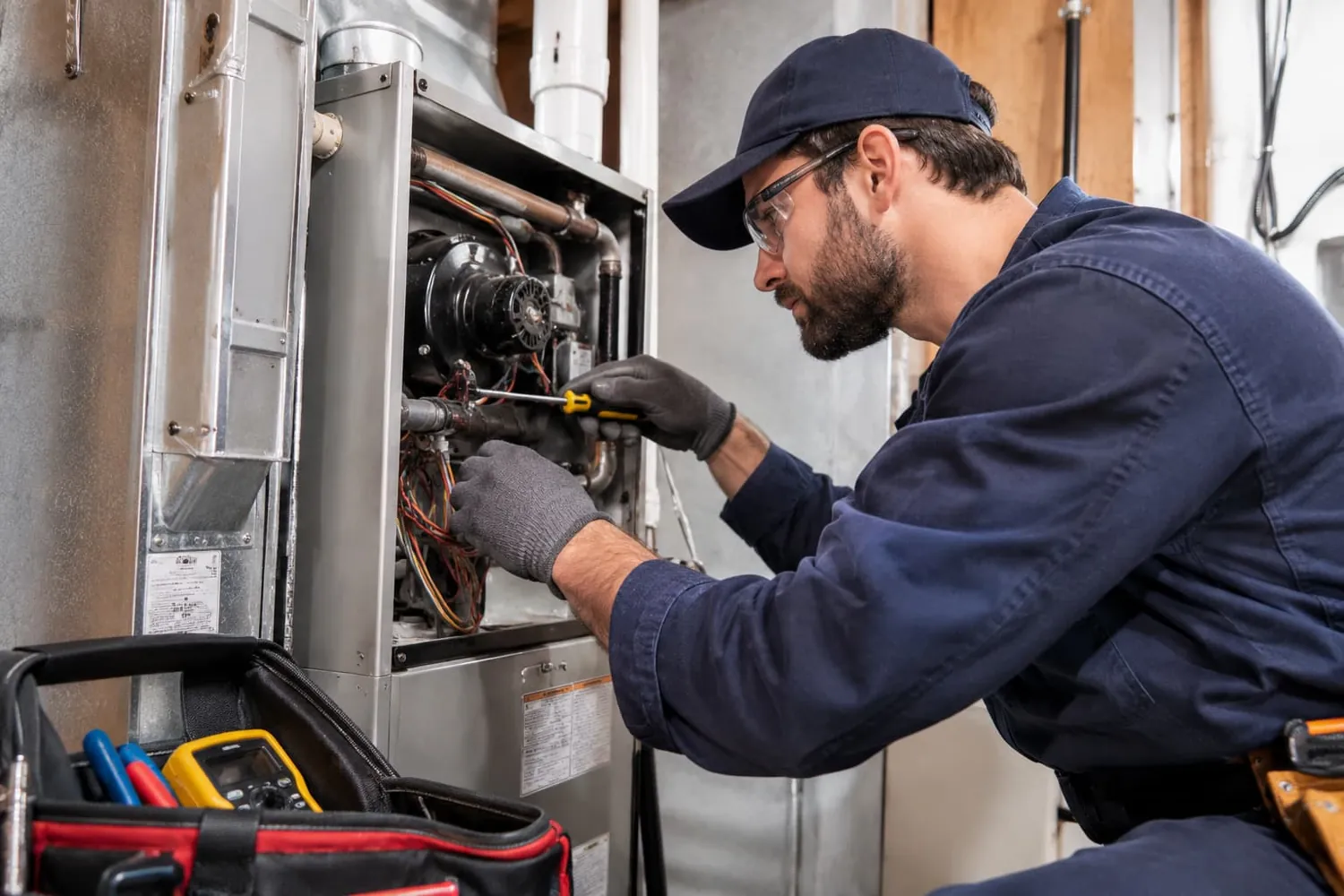
A furnace repair technician starts by confirming the reported condition and the type of equipment in the house. The provider may inspect the thermostat, electrical supply, accessible ductwork, return path, and airflow at registers. These checks can show whether the concern is limited to the furnace or involves distribution through the home.
For a gas-fired unit, the technician may test the gas valve, pilot light where the model uses one, burner assembly, control board, limit switch, and pressure switch. A failed control or safety switch can prevent normal ignition or shut the unit down during operation. The provider can explain the component findings and the safety purpose of each part.
A homeowner asking someone to fix a furnace may report no heat, short cycling, weak airflow, unusual sounds, or rooms that do not warm evenly. A furnace fix may involve an electrical control, ignition-related part, blower issue, or a duct-related correction, depending on the diagnosis. If refrigerant is mentioned, it normally relates to a heat pump or air-conditioning side of a combined system rather than a standard gas-furnace heating cycle.
Furnace repair work in La Verne
| Part | What it does | Signs it is failing |
|---|---|---|
| Air filter | It catches airborne debris before air moves through the furnace. | Restricted airflow, more dust, or a furnace that overheats. |
| Thermostat | It signals the furnace when indoor temperature calls for heat. | Incorrect temperature readings, no response, or irregular cycling. |
| Igniter | It starts the burner ignition process in many gas furnaces. | The furnace clicks or starts a cycle but produces no heat. |
| Flame sensor | It confirms that burner flame is present after ignition. | Burners light briefly, then shut off. |
| Blower motor | It moves heated air through the ducts and into the home. | Weak airflow, squealing, rattling, or no air movement. |
Dust, wind, and cool-season use in La Verne
La Verne’s dry summers can leave heating equipment unused for months, while winter nights create the first sustained demand for heat. Windblown dust can accumulate around exterior equipment and enter homes through open windows, increasing the importance of a correctly fitted filter. Rainfall is concentrated in the cooler season, so drainage around outdoor equipment and crawl-space access should be kept in mind. A provider can examine the operating condition when the system is running under a normal heat call.
Old Town La Verne
Old Town has established housing where original layouts and later renovations can affect ducts and equipment placement.
University of La Verne area
Properties near the university include rentals and older homes, so authorization and access may need to be arranged in advance.
Live Oak Canyon
Homes near Live Oak Canyon can have foothill exposure, sloped lots, and varied driveway access.
Marshall Canyon area
The Marshall Canyon area near the foothills may have larger lots and wind exposure that affect outdoor equipment locations.
North La Verne
North La Verne neighborhoods are closer to the foothills and can include homes with attic or garage-based heating equipment.
La Verne furnace questions
Can winter humidity or rain around Live Oak Canyon and north La Verne affect heating equipment or access?
Rain can make exterior paths, crawl-space entries, and equipment pads harder to access, especially where drainage is poor. Moisture should not stand around electrical connections or enter the equipment cabinet. The provider can evaluate the heating system itself, while drainage repairs may require a separate service.
Who should arrange a heating visit for a rental or multi-family property near the University of La Verne?
The answer depends on the lease, property management arrangement, and who is responsible for the equipment. Tenants can report the symptom and provide access details, while the owner or manager may need to approve work. Tell us whether the furnace serves only one unit or may be part of a larger building system.
How can La Verne’s trees, pollen, and Santa Ana dust affect a home’s heating airflow?
Dust and pollen can load filters and settle near return grilles, while leaves can collect around outdoor equipment. A restricted filter can reduce airflow and contribute to overheating or uneven room temperatures. Replacing filters on an appropriate schedule and keeping accessible outdoor areas clear can help support normal operation.
Which warning signs in an Old Town La Verne home mean the heating system should be switched off?
Turn the system off if there is smoke, a strong burning or gas odor, repeated breaker trips, visible soot, or a carbon monoxide alarm. Leave the area and contact the appropriate emergency resource if a gas odor or carbon monoxide alarm is present. Do not keep restarting the furnace while waiting for a qualified provider to assess it.
What details help when describing a furnace problem from a La Verne home on the phone?
Share the equipment location, whether the thermostat has power, what the system does when heat is requested, and any sounds, smells, or error codes seen. Mention whether air comes from the vents, whether it is warm, and whether the issue affects every room or only part of the house. Clear details help connect you with a local provider prepared to assess the reported condition.
Need furnace repair in La Verne?
Tell us your town and what is happening.