Furnace repair in Valley Center, CA
Connect with an independent provider for heating problems in Valley Center.
Furnace Repair
TownValley Center, CA
CountySan Diego
ZIP92082
- 6years of experience
- 2,500customers served
- 12team members
- Since 2019serving homeowners
Heating service for Valley Center properties
Furnace repair in Valley Center often starts with the area's rural setting around Hellhole Canyon Preserve and the communities spread across hills and valleys. Homes near Valley Center Village, Cole Grade, Woods Valley, and Lilac can sit on larger parcels than homes in coastal parts of San Diego County. Equipment access, private drives, well-landscaped lots, and distance between the house and exterior units can all matter. We connect homeowners with independent providers who serve the area.
Summer heat and dry air
Valley Center can be much hotter in summer than coastal San Diego communities, and the climate is generally dry. Heating equipment may be inactive for long stretches, so startup checks before the cooler season can identify filter, ignition, or control concerns.
Attics, crawl spaces, and raised homes
Ductwork and equipment may be installed in hot attics, garages, closets, or crawl spaces. These locations can affect air leakage, insulation, access, and the time needed for a complete inspection.
Drainage and stormwater
Hillside lots and private roads can direct rainwater differently from property to property. A provider can inspect accessible drain areas, vent outlets, and exterior equipment conditions after significant rain.
Power and storm conditions
Wind and storms can interrupt power in inland San Diego County. After an outage, a thermostat reset, breaker issue, or safety lockout may be involved, but the system should not be repeatedly reset if it will not operate normally.
How home furnace repair is evaluated in Valley Center
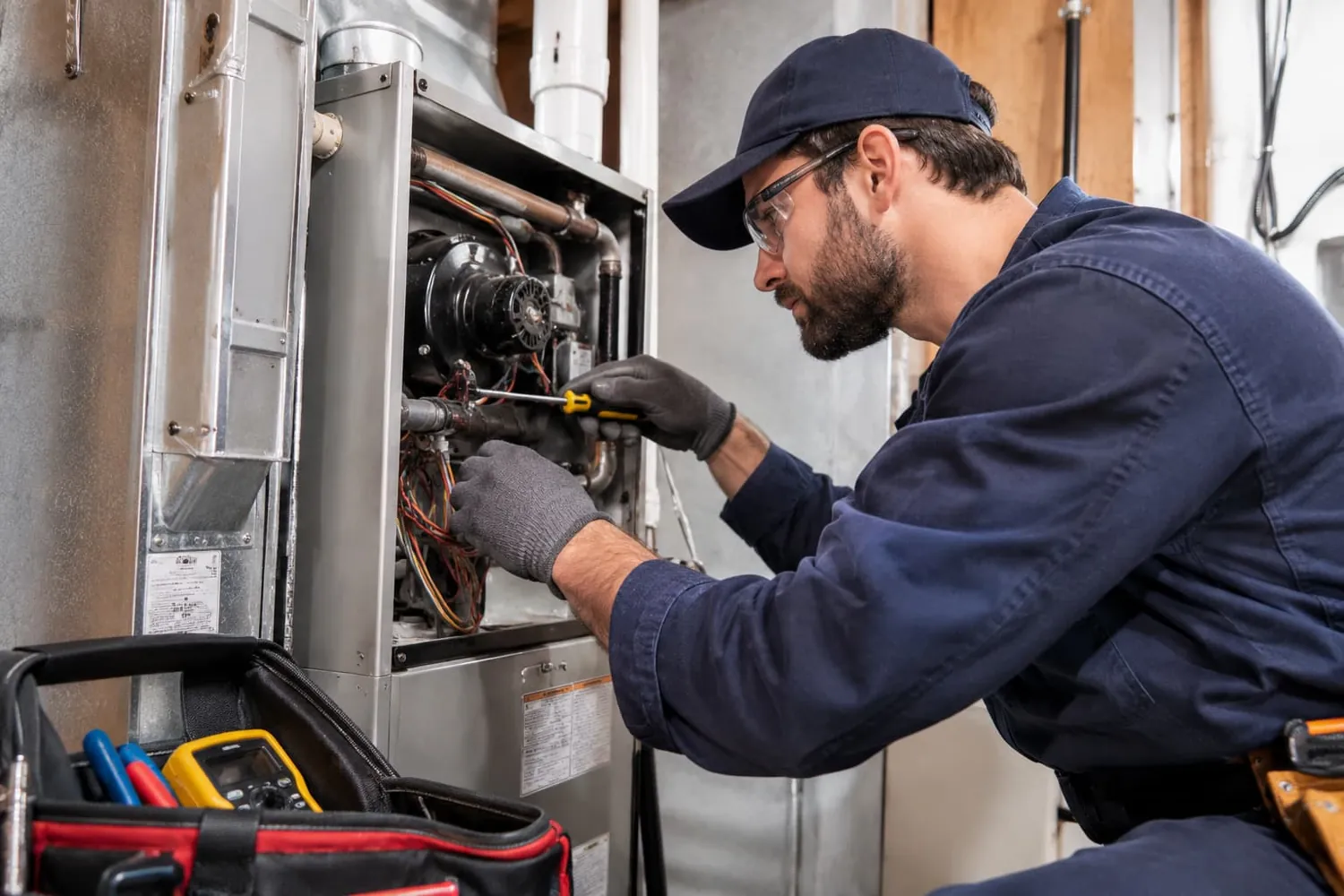
Homes in Valley Center may use gas furnaces, heat pumps, propane-fired equipment, or other forced-air arrangements. A residential furnace repair visit begins with the reported symptom and a check of the thermostat, power, filter, airflow, and accessible ductwork. The technician identifies the fuel and equipment type before testing components.
A furnace not working can result from a burner assembly issue, control board fault, limit switch, pressure switch, or ignition and venting problem. Furnace cycling can be linked to airflow restrictions, thermostat operation, safety controls, or other system faults. Furnace noise may come from a blower, cabinet panel, inducer, duct movement, or another component, so the sound location and timing are useful details.
A provider may also distinguish a heating fault from an issue in a combined heating and cooling system. Refrigerant applies to heat pumps and air-conditioning equipment, not to a standard gas furnace's heating process. If you need to fix a furnace, the local provider can explain test findings, needed parts, and safety concerns, including any carbon monoxide-related issue.
Furnace repair work in Valley Center
| Part | What it does | Signs it is failing |
|---|---|---|
| Air filter | It catches airborne debris before air moves through the furnace. | Restricted airflow, more dust, or a furnace that overheats. |
| Thermostat | It signals the furnace when indoor temperature calls for heat. | Incorrect temperature readings, no response, or irregular cycling. |
| Igniter | It starts the burner ignition process in many gas furnaces. | The furnace clicks or starts a cycle but produces no heat. |
| Flame sensor | It confirms that burner flame is present after ignition. | Burners light briefly, then shut off. |
| Blower motor | It moves heated air through the ducts and into the home. | Weak airflow, squealing, rattling, or no air movement. |
Seasonal planning for inland San Diego County
Warm, dry summers can leave a furnace untouched for months in Valley Center. Before regular heating use, a filter change and professional system review can help identify issues that are easier to address before colder nights arrive. Wind, rain, and utility interruptions can affect electrical controls and exposed equipment. Keep access routes clear, especially where equipment sits behind gates, on slopes, or near landscaping.
Where we work in Valley Center
Also nearby: Escondido, Vista, Pauma Valley, Bonsall, San Marcos.
Valley Center Village
Village-area homes may have varied ages, equipment types, and access from local streets.
Cole Grade
Properties along Cole Grade Road can include larger lots and longer access drives.
Woods Valley
Rural parcels in Woods Valley may have equipment locations away from the street.
Lilac
The Lilac area has rolling terrain that can affect drainage and exterior equipment access.
Paradise Mountain
Hillside properties near Paradise Mountain may have wind exposure and slope-related access considerations.
Valley Center furnace questions
What should a Valley Center homeowner do when a storm or power outage leaves the heating system off?
Check the thermostat, the electrical panel, and any visible disconnect only if it can be done safely. Avoid repeatedly cycling breakers or bypassing safety controls. A provider can diagnose whether the outage affected a control, ignition sequence, or another part of the system.
Why might heating costs rise at a larger Woods Valley property even though the furnace still runs?
A loaded filter, duct leakage, poor return airflow, furnace cycling, thermostat settings, insulation, and equipment condition can all contribute. A provider can inspect system operation and accessible ductwork to identify likely causes.
When is furnace maintenance most useful for a home near Cole Grade Road?
Scheduling maintenance before the regular cool-season heating use gives the provider a chance to inspect operation after the long warm period. The visit can include filter condition, burners or heating elements, controls, airflow, and visible venting as appropriate to the equipment.
What happens step by step during a Valley Center heating visit?
The technician asks about the symptom, identifies the equipment, checks basic controls and power, and inspects accessible components. They test the system, explain findings, and discuss repair options. We make the connection; the independent provider performs the diagnosis and work.
How long do parts and repairs usually take for a furnace fix on a rural Valley Center property?
Timing depends on the diagnosed part, equipment model, safe access, and supplier availability. Some issues can be evaluated without replacing parts, while others require a specific component. The provider can give timing information after identifying the system and fault.
Need furnace repair in Valley Center?
Tell us your town and what is happening.