Furnace repair in San Bernardino, CA
Connect with a local provider for furnace help in San Bernardino.
Furnace Repair
TownSan Bernardino, CA
CountySan Bernardino
ZIP92401, 92404, 92405, 92407, 92408, 92410, 92411
- 6years of experience
- 2,500customers served
- 12team members
- Since 2019serving homeowners
Heating concerns across San Bernardino's older core and newer foothill areas
San Bernardino sits in the Inland Empire, where Interstate 10, Interstate 215, State Route 210, and State Route 330 connect the city with surrounding valleys and mountain communities. The city includes established areas around downtown and Uptown, alongside newer development toward the north and east. Homes range from early twentieth-century houses to ranch homes, apartments, and newer subdivisions. Those differences can affect equipment location, duct routes, and access for a furnace inspection.
Older homes and varied construction
Older San Bernardino houses may have later additions, wall furnaces, older duct runs, or converted heating equipment. A local provider can identify the heating layout before recommending a furnace repair service.
Lots, grades, and equipment access
Lots near the foothills can have changes in grade, while flatter neighborhoods may have equipment beside a garage or on a side yard. The technician who comes out needs clear access to the furnace, return grille, disconnects, and outdoor equipment.
Leaves, pollen, and dust
Trees and seasonal pollen can collect around return grilles and outdoor equipment. Filters, blower compartments, and condensate drains may need attention when debris restricts airflow.
Winter rain and nearby mountain snow
Winter storms can bring rain to San Bernardino, while snow affects nearby higher elevations. Wind-driven debris and wet conditions can expose drainage, venting, and electrical connection issues.
How furnace repair works in San Bernardino homes
San Bernardino homes may use a gas furnace, an electric furnace, or a forced air heating setup paired with central air conditioning. A furnace technician can check the thermostat call, electrical power, safety controls, filter condition, and air movement. Older homes can also have ductwork changes from remodels or additions.
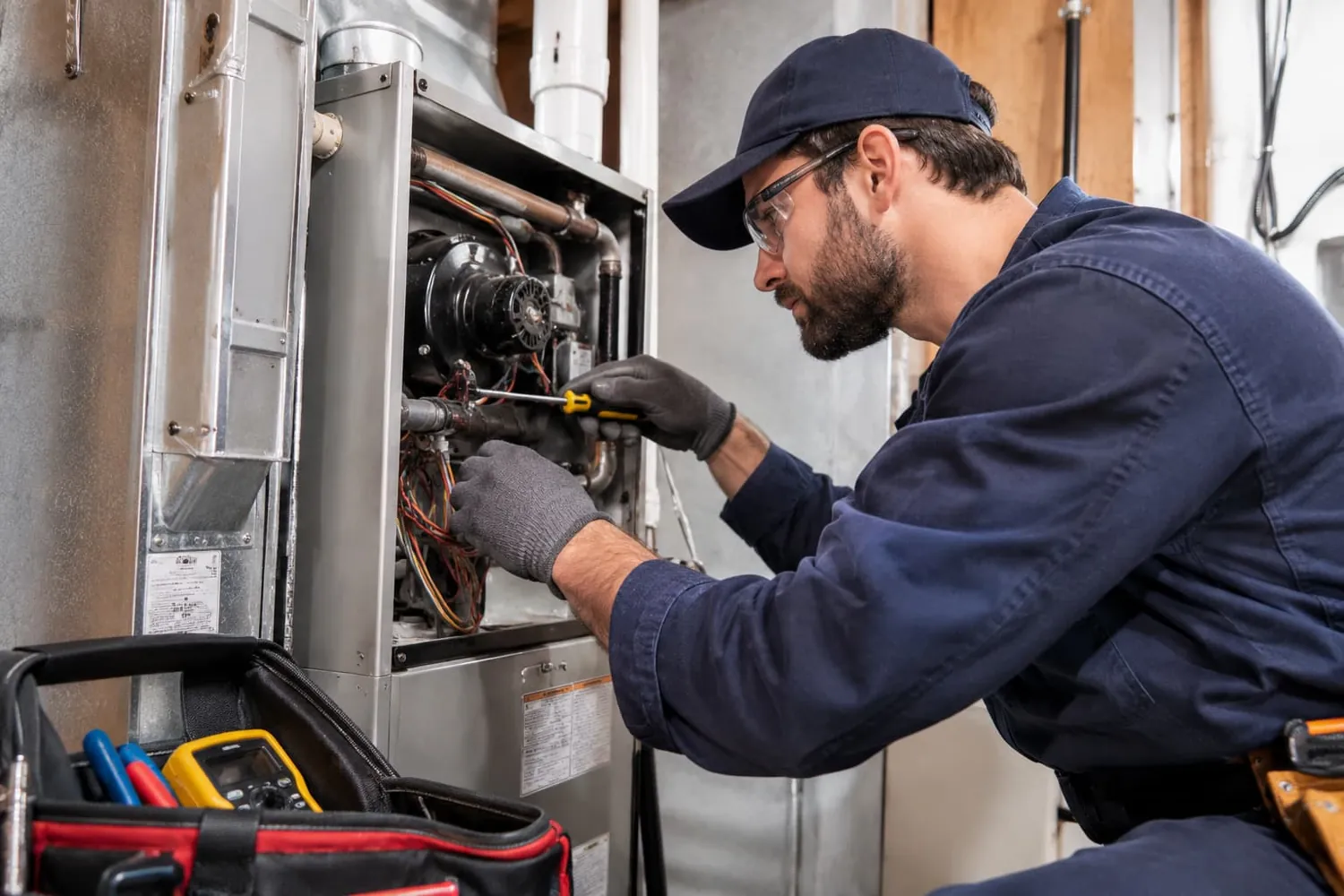
Common calls include furnace noise, short cycling, cool air from registers, a system that will not start, and uneven heat. The provider may test an igniter, flame sensor, burners, blower motor, limit switch, and control wiring. On electric equipment, the visit can include checks of heating elements, sequencers, and connections.
We connect callers with independent providers for furnace repair services in San Bernardino. The furnace repair technician who visits can inspect the central heating system, explain the fault found, and provide a quote for work such as a part replacement, furnace maintenance, or a furnace tune up. If repair is not practical, that provider can discuss furnace installation options.
Furnace repair work in San Bernardino
| Part | What it does | Signs it is failing |
|---|---|---|
| Air filter | It catches airborne debris before air moves through the furnace. | Restricted airflow, more dust, or a furnace that overheats. |
| Thermostat | It signals the furnace when indoor temperature calls for heat. | Incorrect temperature readings, no response, or irregular cycling. |
| Igniter | It starts the burner ignition process in many gas furnaces. | The furnace clicks or starts a cycle but produces no heat. |
| Flame sensor | It confirms that burner flame is present after ignition. | Burners light briefly, then shut off. |
| Blower motor | It moves heated air through the ducts and into the home. | Weak airflow, squealing, rattling, or no air movement. |
Seasonal heating conditions in San Bernardino
San Bernardino summers are hot and dry, so heating equipment may sit unused for long periods before cool weather arrives. A first seasonal start can reveal a dirty furnace filter, a weak igniter, or a blower problem that was not apparent during cooling season. Winter rain and wind can affect outdoor electrical components and combustion-air or vent terminations. A furnace inspection before regular heating use can help identify operating concerns.
Where we work in San Bernardino
Also nearby: Highland, Colton, Loma Linda, Rialto, Redlands, Grand Terrace.
Downtown
Older commercial and residential buildings can have altered heating layouts and limited equipment access.
Uptown
Established homes may have a mix of original ducts and later heating upgrades.
Del Rosa
Foothill-adjacent streets can have varied lot grades and exposure to wind.
Muscoy
Properties in this northern area can include older homes and larger lots.
University District
Homes near California State University, San Bernardino include a mix of established and newer construction.
Verde Village
This residential area includes detached homes where garage and closet furnaces are common locations.
San Bernardino furnace questions
Which San Bernardino ZIP codes and sections can be matched with a furnace provider?
We connect callers in ZIP codes 92401, 92404, 92405, 92407, 92408, 92410, and 92411 with independent local providers when service is available. This includes areas such as Downtown, Uptown, Del Rosa, Muscoy, and the University District. The provider confirms the job location and access details directly.
How can an older house near Uptown or a historic San Bernardino property change the heating work?
Older homes may have undersized returns, aging ducts, original vents, or heating equipment added during a renovation. A provider can trace the airflow path and inspect the furnace cabinet and venting before proposing repairs. Changes to historic features or building systems may require additional planning.
What should owners of newer San Bernardino townhouses, condos, or subdivisions know when heat stops?
Newer attached homes can have furnaces in closets, attics, garages, or utility rooms. Shared walls and homeowners association rules can affect access and replacement planning. The provider can identify the equipment type and the location of the thermostat, filter, and shutoffs.
What can San Bernardino's wettest winter weather do to a heating system?
Rainy winter conditions can reveal blocked condensate drains, damaged outdoor connections, or moisture near vent terminations. Wind can also move leaves and debris into areas around outdoor equipment. If a system behaves differently after a storm, a technician can inspect those components.
When does repairing an aging heating system make more sense than replacing it in a San Bernardino house?
That decision depends on the condition of the heat exchanger, burners, blower, controls, ductwork, and the specific failed part. A provider can explain whether the system has a repairable fault or whether furnace installation should be considered. Homeowners can compare the quote, equipment condition, and expected scope before deciding.
Need furnace repair in San Bernardino?
Tell us your town and what is happening.