Furnace repair in Newport Coast, CA
Connect with an independent local provider for heating concerns in Newport Coast.
Furnace Repair
TownNewport Coast, CA
CountyOrange
ZIP92657
- 6years of experience
- 2,500customers served
- 12team members
- Since 2019serving homeowners
Coastal weather and heating systems in Newport Coast
Furnace repair in Newport Coast is shaped by the mild marine weather, ocean air, hillside exposure, and cool evenings the community is known for. Crystal Cove, Pelican Hill, Newport Ridge, and other planned neighborhoods include coastal estates, attached homes, and hillside properties. The area sits along the Orange County coast between Newport Beach and Laguna Beach, with terrain rising inland from the shore. We connect residents with independent providers who can assess the heating system at the home.
Coastal housing and building styles
Newport Coast includes planned communities, large detached homes, attached residences, and properties built on sloping coastal terrain. Equipment may be located in attics, garages, mechanical rooms, side yards, or rooftop areas depending on the building design.
Slopes, lots, and outdoor equipment
Hillside lots and landscaped properties can make the location of outdoor HVAC equipment important. Clear access, stable mounting, drainage, and space around components help a provider inspect the system safely.
Trees, pollen, and salt-air debris
Landscaping debris, pollen, dust, and coastal salt air can affect outdoor equipment and return-air areas. Filters should fit correctly, and leaves or plant growth should not block equipment airflow.
Rainstorms, wind, and no regular snow
Newport Coast can receive winter rain and strong coastal wind, but snow is not a normal local weather condition. After storms, homeowners can look for standing water near equipment, damaged covers, or obvious vent issues and report them to the provider.
Furnace repair for Newport Coast coastal homes
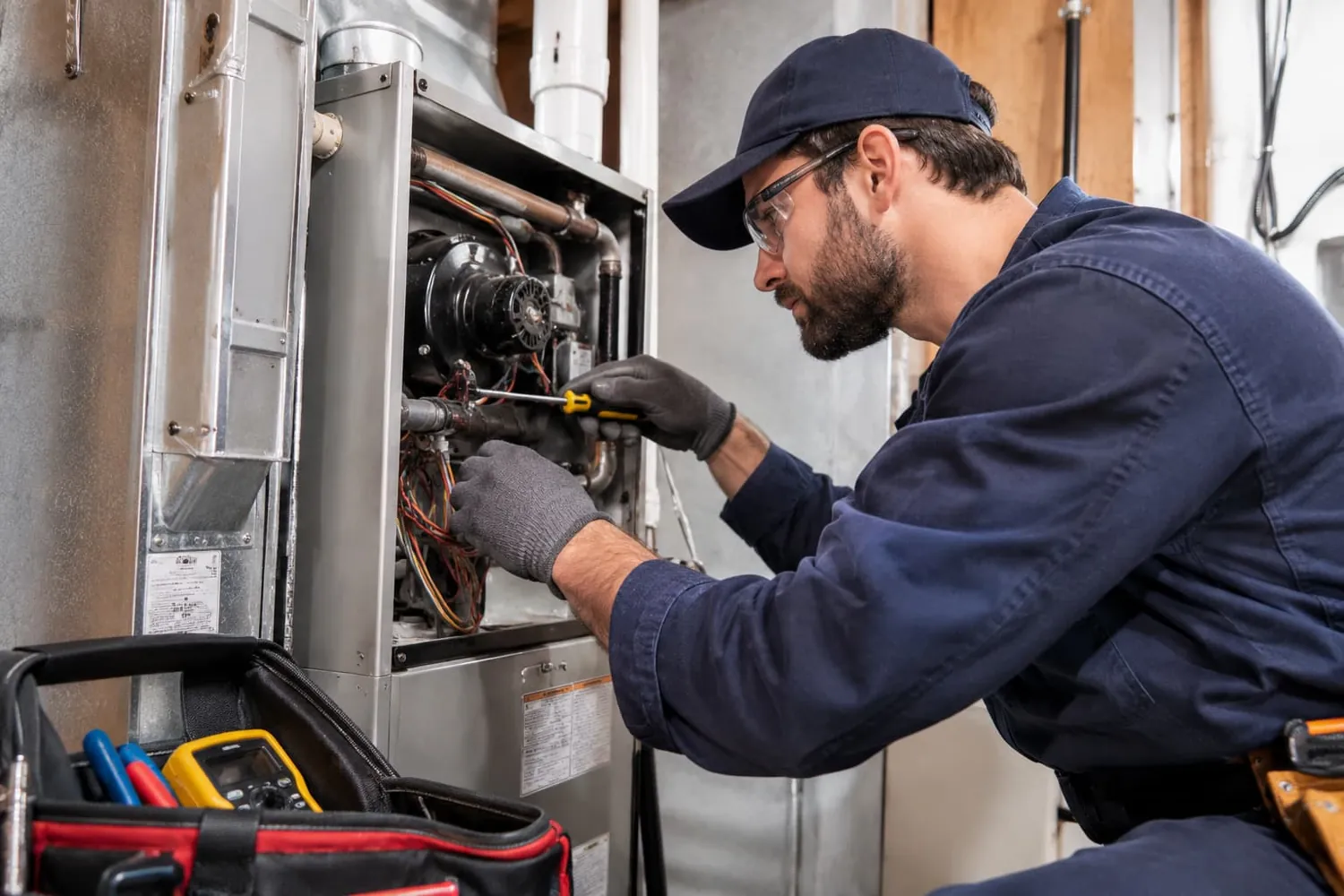
A home furnace repair visit can begin with the basic sequence: thermostat demand, electrical power, airflow, ignition, and heat delivery through the ducts. The technician may check the air filter, furnace filter, blower motor, and blower wheel because a restricted filter or blower issue can reduce warm-air circulation. If the furnace is not working, details such as whether it starts, clicks, runs briefly, or blows cool air are useful diagnostic information.
For a gas heating unit, the provider may inspect the igniter, flame sensor, gas valve, inducer motor, venting path, and burner operation. Older equipment may have a pilot light, while many newer systems use electronic ignition. A furnace repair technician can also evaluate safety controls and the heat exchanger as part of an appropriate diagnostic process.
A furnace fix should follow the identified cause, whether that involves a control issue, airflow problem, ignition failure, or a worn mechanical component. When callers need to fix a furnace that has stopped producing heat, we connect them with independent providers who quote and perform the work. The provider can explain whether a repair is practical or whether other equipment options should be considered.
Furnace repair work in Newport Coast
| Part | What it does | Signs it is failing |
|---|---|---|
| Air filter | It catches airborne debris before air moves through the furnace. | Restricted airflow, more dust, or a furnace that overheats. |
| Thermostat | It signals the furnace when indoor temperature calls for heat. | Incorrect temperature readings, no response, or irregular cycling. |
| Igniter | It starts the burner ignition process in many gas furnaces. | The furnace clicks or starts a cycle but produces no heat. |
| Flame sensor | It confirms that burner flame is present after ignition. | Burners light briefly, then shut off. |
| Blower motor | It moves heated air through the ducts and into the home. | Weak airflow, squealing, rattling, or no air movement. |
Marine air and seasonal heating use
Newport Coast has mild coastal temperatures, but homes can still need dependable heat during cooler nights and winter weather. Moisture, salt air, and wind are relevant to exposed outdoor equipment and metal components. Rainy periods also make drainage, vent termination condition, and weather protection worth reviewing.
Where we work in Newport Coast
Also nearby: Newport Beach, Laguna Beach, Irvine, Costa Mesa, Laguna Hills, Aliso Viejo.
Crystal Cove
Coastal exposure and planned residential development can affect outdoor equipment placement and access.
Pelican Hill
Hillside homes here may have multiple zones, larger duct systems, or equipment in mechanical spaces.
Newport Ridge
Attached and detached homes can have differing HOA procedures and equipment access arrangements.
Pacific Ridge
Elevated streets can experience wind exposure that makes comfort differences more noticeable.
Ocean Ridge
Coastal conditions and sloped lots make clear drainage around exterior components important.
San Joaquin Hills
Hillside terrain can affect access routes to attic, garage, or side-yard HVAC equipment.
Newport Coast furnace questions
How can winter rain runoff around a Newport Coast hillside home affect heating equipment?
Standing water, blocked drainage, or moisture near exterior electrical components can create concerns around HVAC equipment. Do not operate equipment if there is an immediate electrical safety concern. Describe the water location, storm timing, and system behavior to the provider.
Who approves heating work for a Newport Ridge rental or attached residence?
The lease, property owner, or property manager generally determines who can authorize work in a rental home. Attached communities may also have HOA rules for exterior or shared areas. The resident can report the symptoms and arrange access according to the property’s procedures.
Can salt air, pollen, or trees around Crystal Cove contribute to a heating problem?
Salt air and outdoor debris can affect exposed equipment, while pollen and dust can contribute to filter loading. These conditions may reduce airflow if filters or exterior clearances are neglected. A provider can inspect the accessible equipment and identify whether debris is related to the problem.
Which heating warning signs in a Pelican Hill home mean the system should be shut off?
Turn the system off if you smell gas, see smoke, notice sparking, or suspect carbon monoxide exposure. Leave the area and contact the gas utility or emergency services when a gas leak or carbon monoxide danger is suspected. Do not continue operating the unit until a qualified provider has assessed it.
What details should I give when calling about a furnace not working in Newport Coast?
State the equipment type if known, the thermostat setting, whether the unit makes sounds, whether air moves from registers, and any error code shown. Mention recent storms, filter changes, unusual odors, and whether the problem affects the whole home or one zone. Those details help the provider prepare for the diagnostic visit.
Need furnace repair in Newport Coast?
Tell us your town and what is happening.