Furnace repair in Corona Del Mar, CA
Connect with a local provider for furnace repair in Corona Del Mar.
Furnace Repair
TownCorona Del Mar, CA
CountyOrange
ZIP92625
- 6years of experience
- 2,500customers served
- 12team members
- Since 2019serving homeowners
Heating systems across Corona Del Mar’s varied coastal neighborhoods
Corona del Mar’s neighborhoods range from compact village blocks near Pacific Coast Highway to larger homes on Spyglass Hill and the streets above Newport Harbor. The community sits within Newport Beach on the Orange County coast, with steep streets and exposed bluffs in several sections. Older cottages, remodeled homes, condominium buildings, and newer construction can all have different heating layouts. We connect homeowners with independent local providers for furnace repair in Corona Del Mar.
Roads and neighborhood layout
Pacific Coast Highway, MacArthur Boulevard, and Jamboree Road are major routes around Corona del Mar. The village street grid and the hillside streets above it can affect parking, equipment access, and the route to an attic or garage unit.
Remodeled coastal homes
Many houses have been expanded or substantially remodeled over time. A provider can check whether added rooms have adequate return-air paths, supply registers, and ductwork for balanced heating.
Condos and rental properties
Attached homes and rental units may share walls, roof spaces, or mechanical areas. The technician who comes out can identify the unit serving the home and coordinate access with the owner or property manager when needed.
Wind and bluff exposure
Homes near the coast or on elevated streets can receive persistent ocean wind. Leaky doors, windows, and poorly sealed ducts can make a forced air heating system work harder to hold a steady indoor temperature.
How furnace repair works in Corona del Mar homes
Corona del Mar homes may use a gas furnace, an electric furnace, or a packaged central system with forced air heating. Equipment can be located in a garage closet, attic, roof area, or dedicated mechanical space. A local provider starts by identifying the equipment type, fuel source, thermostat call, and basic safety controls.
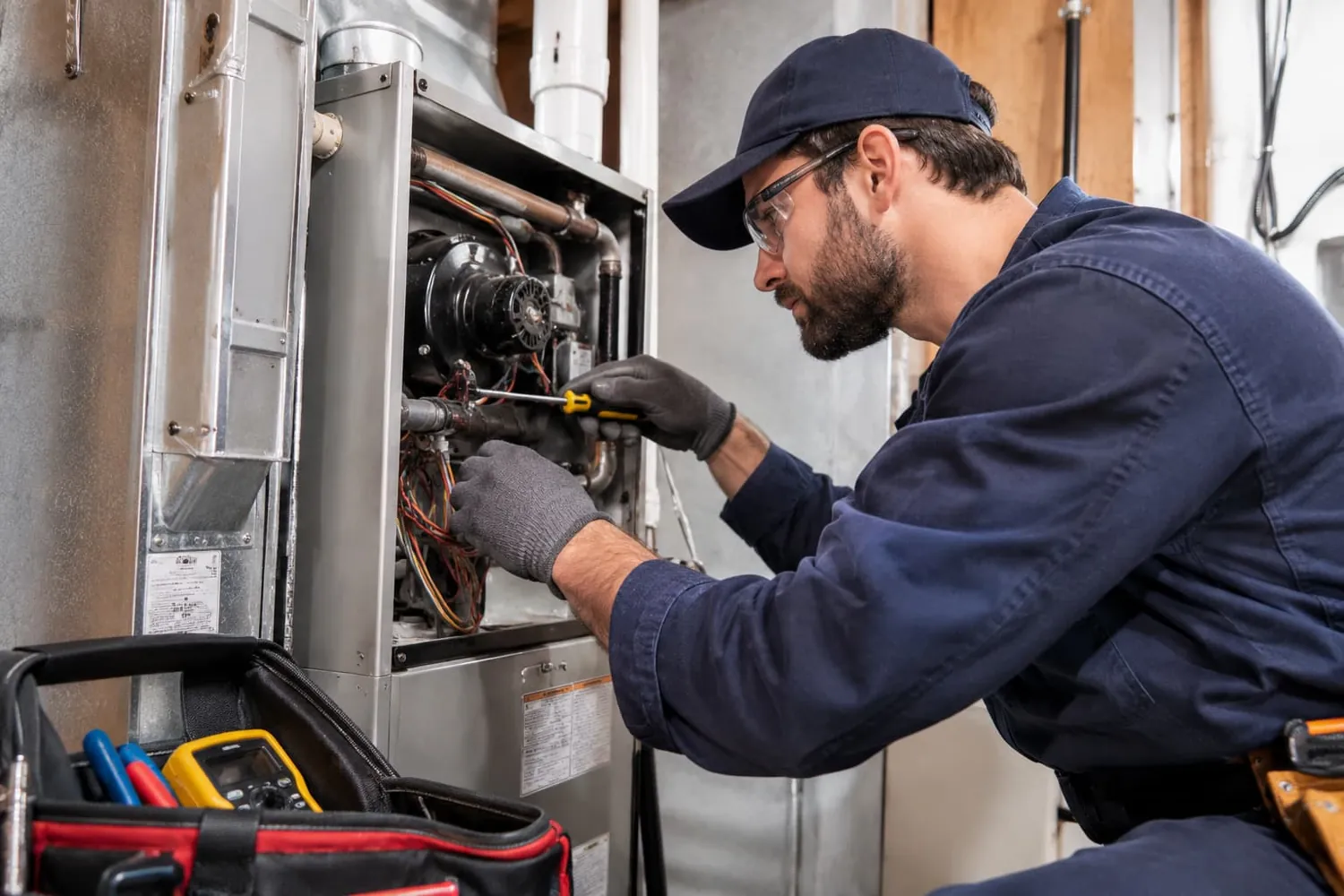
Common calls involve furnace cycling, weak airflow, furnace noise, or a system that starts but does not deliver warm air. The technician may test the igniter, flame-sensing sequence, pressure switch, blower operation, and control signals. For a heat pump system, refrigerant performance can also affect whether the home receives adequate heat.
For heater repair, the provider should inspect the filter, return and supply ductwork, burners or heating elements, venting, and accessible electrical connections. Heating repair may include clearing a drainage connection, replacing a failed component, correcting a loose connection, or addressing an airflow restriction. If carbon monoxide is suspected or a carbon monoxide alarm activates, leave the building and contact emergency services or the gas utility before arranging service.
Furnace repair work in Corona Del Mar
| Part | What it does | Signs it is failing |
|---|---|---|
| Air filter | It catches airborne debris before air moves through the furnace. | Restricted airflow, more dust, or a furnace that overheats. |
| Thermostat | It signals the furnace when indoor temperature calls for heat. | Incorrect temperature readings, no response, or irregular cycling. |
| Igniter | It starts the burner ignition process in many gas furnaces. | The furnace clicks or starts a cycle but produces no heat. |
| Flame sensor | It confirms that burner flame is present after ignition. | Burners light briefly, then shut off. |
| Blower motor | It moves heated air through the ducts and into the home. | Weak airflow, squealing, rattling, or no air movement. |
Coastal conditions and seasonal heating use
Corona del Mar has a mild coastal climate, but cool evenings and marine layers can still bring heating systems into regular use. Salt-laden air and wind exposure can affect exterior metal components and openings over time. Fall and winter are useful times to have a furnace service visit before longer overnight heating cycles begin. A provider can also evaluate electric furnace repair needs where the home uses electric heat rather than gas.
Where we work in Corona Del Mar
Also nearby: Newport Beach, Laguna Beach, Costa Mesa, Irvine, Huntington Beach.
Corona del Mar Village
Older cottages and closely spaced homes may have compact equipment closets and altered duct routes from prior remodeling.
Irvine Terrace
Homes near the harbor may have heating equipment in garages, attics, or side mechanical areas.
Spyglass Hill
Elevated homes can have exposed windows and multi-level floor plans that affect room-to-room airflow.
Harbor View Hills
Larger homes and additions may require a check of zoning, returns, and duct capacity.
Shore Cliffs
Coastal exposure and sloped lots can influence access to exterior equipment and roof-adjacent spaces.
Corona Del Mar furnace questions
Which Corona del Mar sections and ZIP code can be connected with furnace repair service?
We connect callers in Corona del Mar, including the 92625 ZIP code, with independent providers in the area. This includes village homes, Irvine Terrace, Harbor View Hills, Spyglass Hill, and other Corona del Mar sections within Newport Beach.
How can an older Corona del Mar cottage affect a furnace repair visit?
Older homes may have smaller return grilles, limited equipment clearance, or ductwork changed during earlier updates. The provider can inspect the accessible layout and explain whether the concern is the furnace itself, an airflow issue, or both.
What should a provider check in a Corona del Mar townhouse or condominium?
The visit can include the individual heating unit, thermostat, filter access, vents, and the accessible portions of the duct system. In attached housing, the provider may need building or owner approval to reach a shared roof, utility room, or other restricted area.
How does February rain in Corona del Mar affect a heating system?
February is commonly among Southern California’s wetter months, and rain can reveal drainage, vent-cap, or exterior electrical issues. A provider can inspect accessible condensate drains, weather-exposed components, and the heating cycle after damp weather.
When does repairing make more sense than replacing an aging Corona del Mar heating system?
A local provider can diagnose the specific failed part, inspect the system condition, and discuss repair options alongside furnace installation or furnace replacement. The decision can depend on safety findings, available parts, equipment condition, and how the existing system performs in the home.
Need furnace repair in Corona Del Mar?
Tell us your town and what is happening.